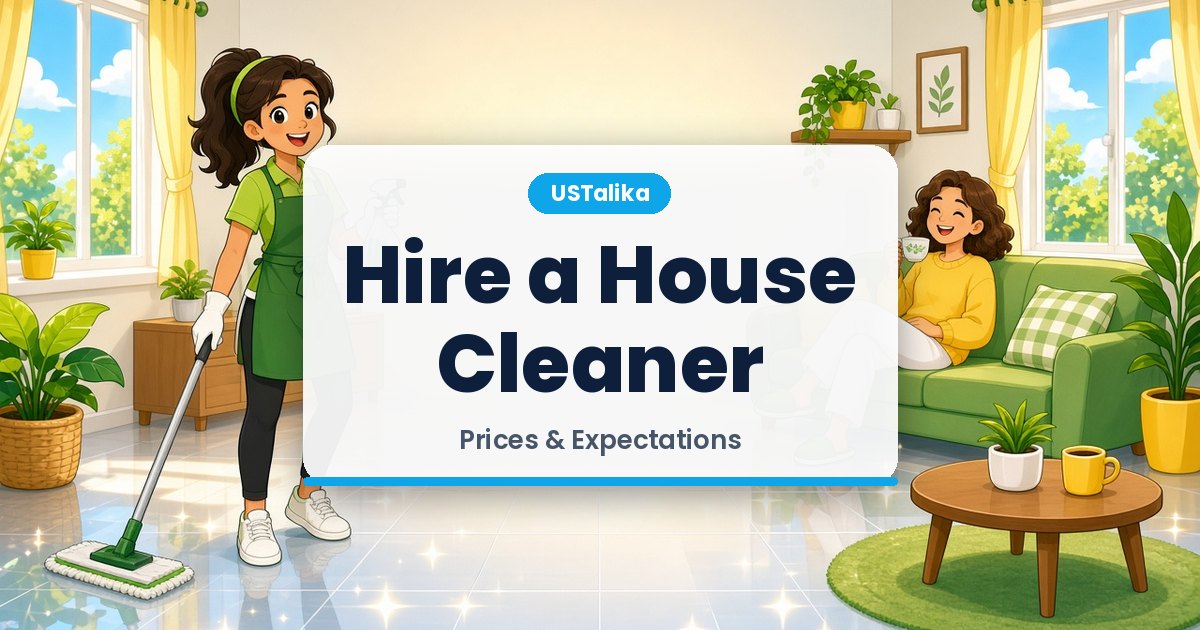
A good house cleaner gives you back hours every week - a bad one gives you anxiety and a lock decision. Screening takes twenty minutes and makes the difference. Here is the process.
Independent pro or cleaning company?
Independents are often cheaper and more consistent - the same person every visit who learns your home. Companies bring insurance, backups for sick days, and teams for deep cleans. Whatever you choose, the listing should tell you: browse the home services category on your city's directory page and compare service menus, home-service flags and published pricing.
The screening questions that matter
- Are you bonded and insured? May I see the certificate?
- Do you bring supplies or use mine? What products do you use around pets?
- What exactly is included in a standard visit, and what costs extra - windows, laundry, inside the fridge?
- How is access handled - key, code, or you present?
- What happens if something is damaged?
Insurance is the divider - an uninsured cleaner injured in your home can become your liability. The FTC covers household service contracts; your state insurance office can confirm a policy is real.
Price the job fairly
Cleaning quotes run flat-rate per visit or hourly. A flat rate for a standard visit is easier to budget; check whether the price assumes weekly, biweekly or monthly frequency - recurring visits should cost less per visit. Our guide to reading service price lists covers the formats.
The first visit: a trial, not a commitment
Book one standard visit and be home for the first half hour. Check the details - baseboards, fixtures, under the couch - the small surfaces that separate professionals from pretenders. Walk through together at the end and adjust the checklist for future visits.
Build it into a relationship
Consistency is the whole value: the same cleaner, the same day, a home that resets itself. Vet, trial, then commit monthly. For the general hiring framework, our 12-question guide works for any home service - start browsing on the USTalika locations index.